

Can You Use Dry Ice in a Cooler? | Chilly Moose
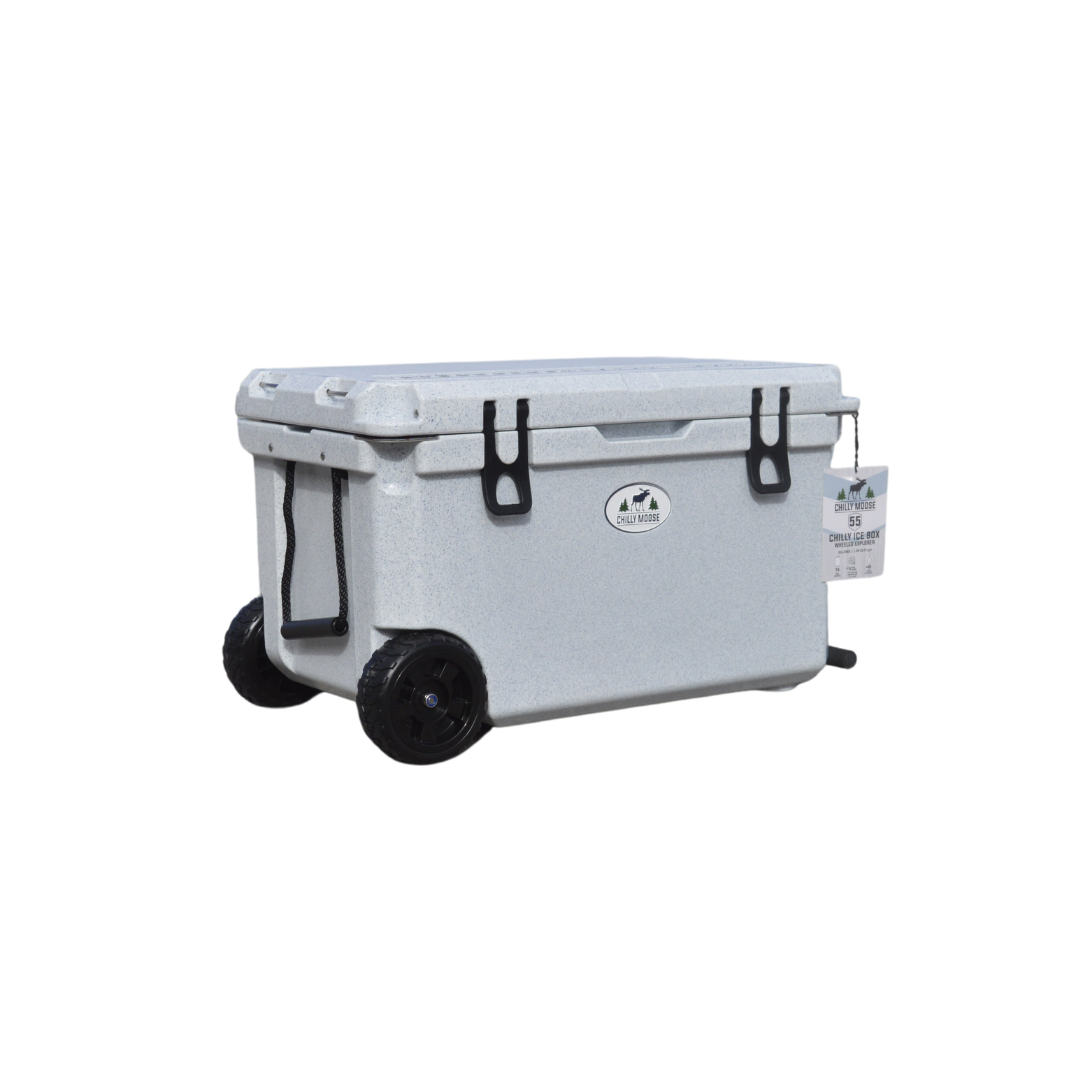
Yes, you can use dry ice in a Chilly Ice Box. The gaskets are not 100% airtight, which allows gas to escape rather than building up pressure inside the cooler, per Chilly Moose product specifications. Dry ice is far colder than water ice and turns straight to gas rather than melting, so it keeps food frozen rather than merely cold. It also needs careful handling, ventilation, and a cooler that is not fully sealed, which is why it suits some trips and not others.
Dry ice comes up whenever someone is driving frozen food a long way, stocking a cottage fridge that is not on yet, or trying to get a catch home in August. It is genuinely useful in those situations and genuinely worth understanding before you buy any.
What dry ice actually is, and why it behaves differently
Dry ice is frozen carbon dioxide. Two things follow from that, and both matter.
It is much colder than water ice, which is why it keeps things frozen rather than just chilled. And it sublimates, meaning it turns directly from solid to gas without passing through a liquid stage. There is no meltwater, no soggy packaging, and nothing to drain at the end.
The gas has to go somewhere, though. That is the single most important thing to understand about using it, and it is why the cooler you put it in matters as much as the dry ice itself.
Why a cooler needs to breathe
An airtight container plus sublimating dry ice means pressure building with nowhere to go. That is why fully sealed containers are the wrong home for it.
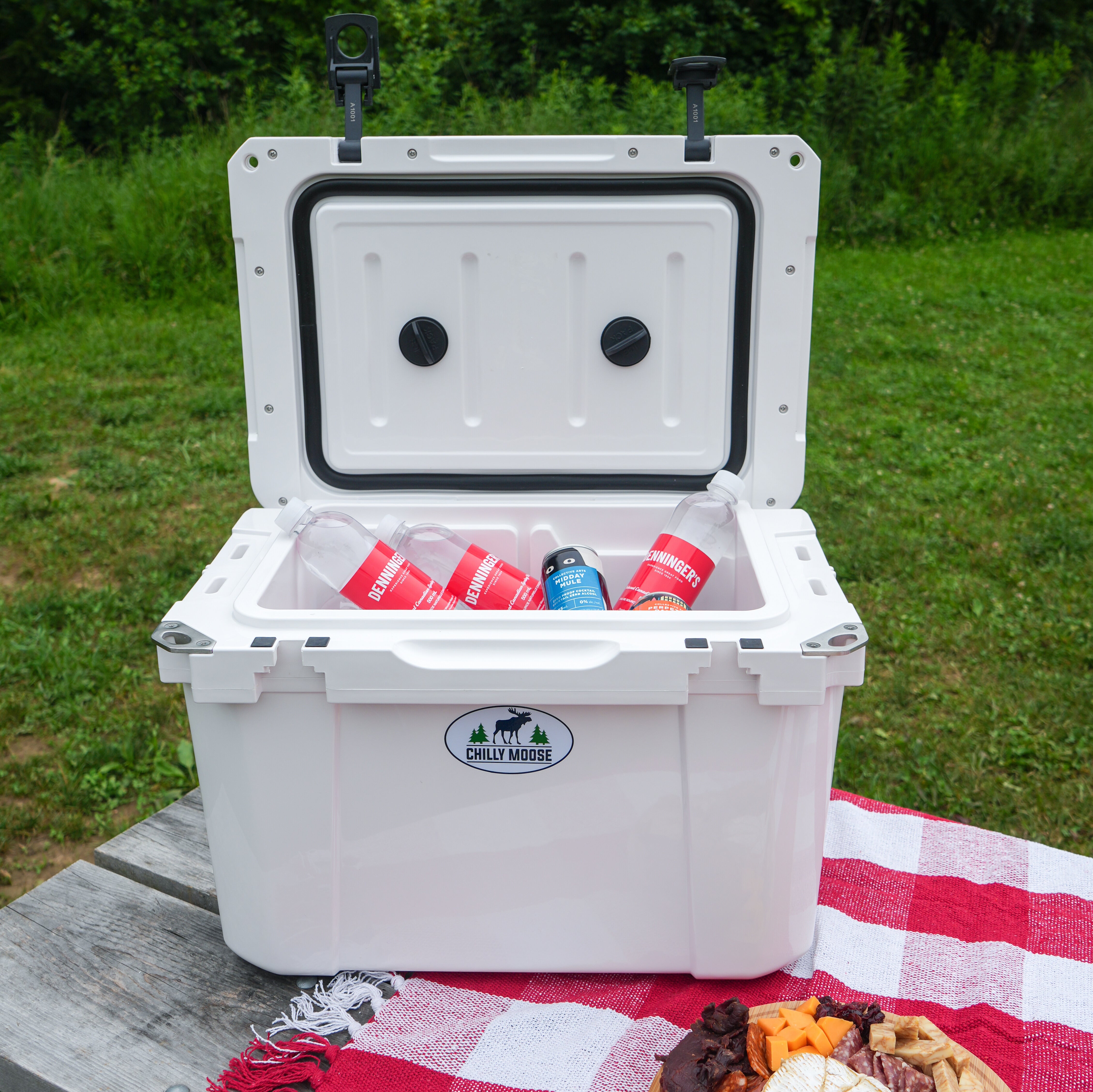
Chilly Moose addresses this directly: the gaskets on a Chilly Ice Box are not 100% airtight, which prevents pressure building up inside the cooler when dry ice is used, per Chilly Moose product specifications. That is a deliberate design choice rather than a shortcoming.
Never modify a cooler to seal it more tightly when dry ice is inside, and never tape a lid shut. If you are using a cooler from another maker, check their guidance first, since not every manufacturer permits dry ice at all.
Handling it safely
This is the part worth reading properly, because dry ice is useful, but it can be hazardous when handled or transported incorrectly.
- Do not touch it with bare hands. Use insulated gloves and tongs. Direct contact with skin causes a cold burn quickly.
- Keep the space ventilated. Carbon dioxide displaces air, so use it in a ventilated area rather than a sealed room, tent, or closed cabin.
- Do not carry it in the passenger compartment where you can avoid it. Transport it outside the passenger area whenever possible, secure the cooler so it cannot move, and maintain fresh-air ventilation throughout the trip. Never leave dry ice in a parked vehicle.
- Do not put it in a sealed container, including glass jars, or a fully airtight cooler.
- Keep it away from children and pets, and never put it in a drink.
- Follow the supplier's guidance, since handling advice and local rules vary by where you buy it.
If any of this makes a trip sound more complicated than it is worth, that is a fair conclusion. For most cottage and boat weekends, block ice does the job with none of the caveats.
When dry ice is worth it, and when it is not
Worth considering for driving frozen food a long distance, keeping a catch or game frozen on the way home, stocking a cottage before the power is on, or any trip where things need to stay frozen rather than just cold.
Probably not worth it for a normal weekend at the lake, a day on the boat, or anything where you mainly want drinks cold and sandwiches intact. Block ice paired with cubed ice is simpler, cheaper, and available everywhere.
A practical middle path many people use: dry ice at the bottom for the frozen items, regular ice above it for everything else. The two work together, with the dry ice extending how long the whole load stays cold.
Packing a cooler with dry ice
- Dry ice is often placed near the top, because the air it cools becomes denser and moves downward through the cooler.
- Always place cardboard, newspaper, or another suitable barrier between the dry ice and the cooler walls or contents.
- Keep anything you do not want frozen away from direct contact. Produce, eggs, and drinks will freeze solid against dry ice.
- Do not tape, strap, or otherwise force the lid into an airtight seal. Use the cooler only as directed by the manufacturer and keep it in a well-ventilated location.
- Buy it as close to departure as you can, since it sublimates continuously whether you are using it or not.
The simpler alternative for most trips
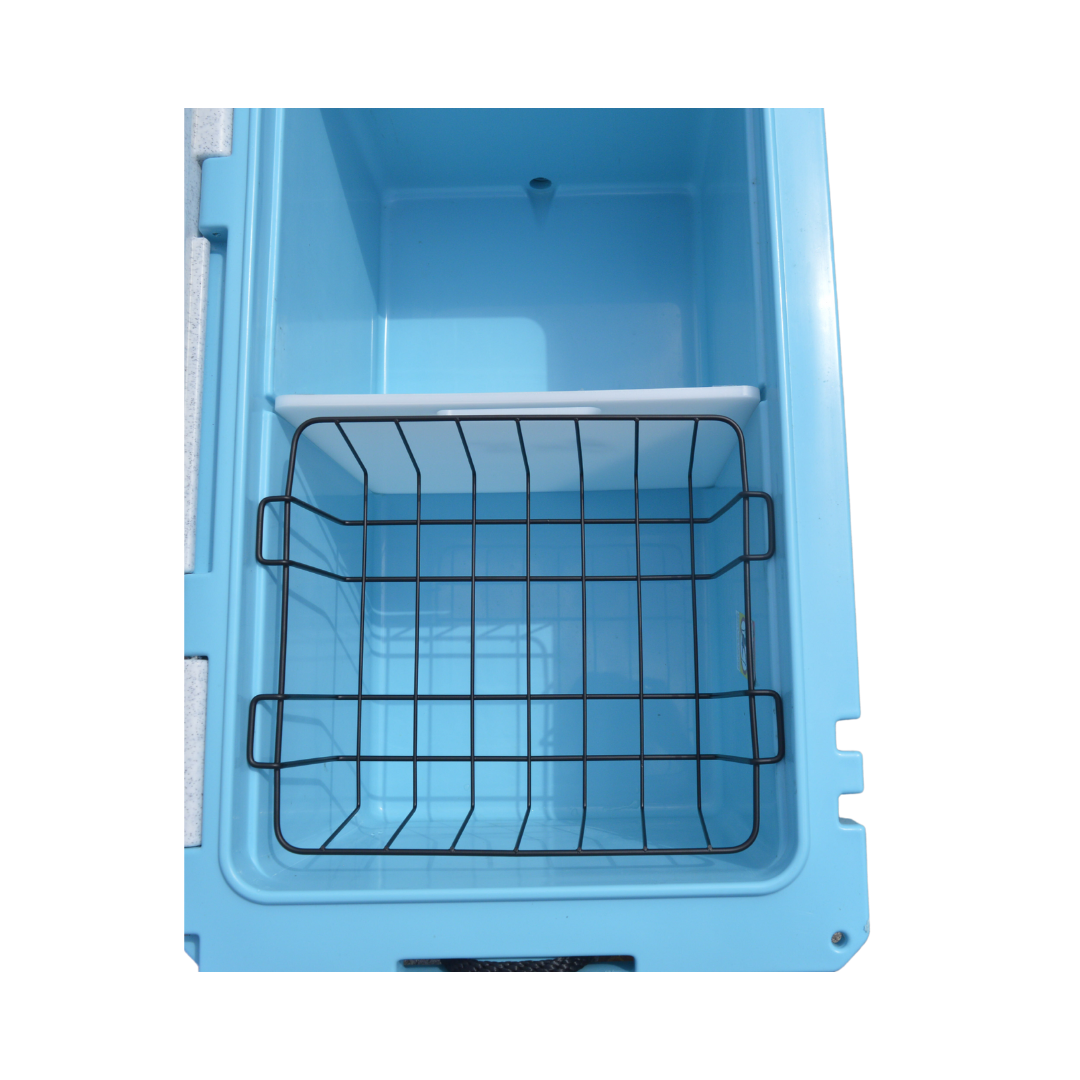
For the majority of Canadian weekends, a well-packed rotomolded cooler and regular ice is the better answer. The Chilly Moose Ice Box uses up to 65mm of pressure-injected insulation for 3 to 5 days of ice retention, and the Cabin Cooler has thick insulated walls and a fully insulated lid for 5 plus days, or 6 plus with the optional Frostlock™ system, per Chilly Moose product specifications. Frostlock™ is an optional upgrade on the Cabin Cooler line, not standard.
Dry ice is a specialist tool. Most trips do not need one.
Why we design for it anyway
Chilly Moose is a woman-founded, family-owned Canadian company that started at a kitchen table in Schomberg, Ontario. Building a gasket that is not fully airtight is the kind of detail nobody asks about in a showroom and everybody is glad of on the one trip where it matters.
Frequently asked questions
Will dry ice damage a cooler?
A manufacturer-approved cooler should accommodate dry ice when it is packed and used correctly. Always place cardboard or another suitable barrier between the dry ice and the cooler walls or contents, and never force the cooler into an airtight seal. The Chilly Moose Ice Box is approved for use with dry ice because its gasket is not completely airtight, allowing gas to escape, per Chilly Moose product specifications. Check the manufacturer's guidance before using dry ice in any other cooler.
How much dry ice do I need?
It depends on trip length, cooler size, and how much of the load needs to stay frozen. Your supplier is the best guide, since they know how their product sublimates.
Can I put dry ice and regular ice in together?
Yes, and many people do. Keep the dry ice separated from anything you do not want frozen solid.
Can I take dry ice on a flight or a ferry?
Rules vary by carrier and there are usually limits on quantity and packaging. Check with the operator before you travel rather than assuming.
What do I do with dry ice I have not used?
Leave it in a ventilated space to sublimate on its own. Do not put it down a sink or a drain, and do not seal it in a container.
Shop the Products in This Article
For most trips, a well-packed cooler and good ice is all you need. For the ones where things have to stay frozen, use dry ice carefully and give the gas somewhere to go.


